ECONEX TAKES PART IN THE OPERATIONAL GROUP “PINEA” WHOSE OBJECTIVE IS TO SOLVE THE PROBLEMS OF THE PINE TREE AND HIGHLIGHT ITS VALUE
ECONEX NEWS
ECONEX TAKES PART IN THE OPERATIONAL GROUP “PINEA” WHOSE OBJECTIVE IS TO SOLVE THE PROBLEMS OF THE PINE TREE AND HIGHLIGHT ITS VALUE
22nd of August, 2018
A. Pascual EFEagro (www.efeagro.com)
Pinea Operational Group (OG) works to solve problems related to Iberian pine nut which is produced by “Pinus pinea”. It is one of the most important conifers in the Iberian Peninsula (Spain and Portugal) because of its multifunctional uses (Its products derived like: wood, pine nuts and fungus).

Roberto Rubio, the person in charge of the operational group, explained to Efeagro that Public Research centres and private companies were working hard to present this innovative project about the Iberian pine nut to the Agricultural Ministry on September 30.
Pinea OG is composed of the Confederation of Spanish Silviculture organizations (COSE); The federation of Castilla y León forestry associations (Fafcycle); The foundation Cesefor; the companies: Ecología y Espacio and SANIDAD AGRÍCOLA ECONEX LTD; the transformative cooperative PiñonSol CyL; Institut de Recerca i Tecnologia Agroalimentàries (IRTA) and Consorci Forestal of Catalunya.
Low productive capacity of pine trees due to Western cone occidental bug
One of the main objectives is to solve the problem of low productive capacity of pine trees due to a phytosanitary problem that affects this species and its productive capacity.
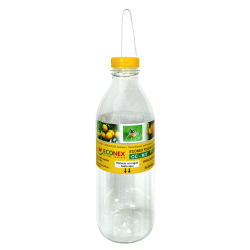
Rubio referred to “Leptoglossus occidentalis”, also known as western cone occidental bug as a pest that absorbs pine cones and dry out it completely. It produces a decrease in pine nut productive capacity.
This situation affects the transformative industry which pays for a product whose productive capacity is uncertain. Also, all that can cause that this activity, which supports a huge amount of families, disappears from rural areas.
Pine nut production is essential for rural areas
It has been said to people who collect pine cones, the industry which dries out pine cones, gathers pine nuts and exports the product to other countries. In addition, it has been highlighted the environmental value of this production because forests are profitable, not abandoned and in good conditions.

Another objective is to “raise awareness of the added value of Iberian pine nut as a dried fruit with a high nutritional value in comparison with other kind of pine nuts” like the Pakistan one.
To achieve these objectives, there are several activities established like informative videos and other informative materials which explain the productive situation and characteristics of the Mediterranean species, “Pinus pinea”.
Recovering the Iberian pine nut production
Spain and Portugal were the main producers of “the real pine nut” 5 years ago. And now, they continue farming 70% of the worldwide field surface which means more than 600.000 hectares of this species, although it is experiencing a drop in its productive capacity. (It does not even appear in the global statistics).
According to Cesefor Fundation, the operational groups are a key element in The European Innovation Partnership for Agricultural productivity and Sustainability (EIP-AGRI).
The EIP-AGRI brings together innovation actors (farmers, advisers, researchers, businesses, NGOs and others) in agriculture and forestry, at EU level. Together they form an EU-wide EIP network.
Pinea OG: Revitalising a sector with a huge potential
EIP-AGRI Operational Groups are project-based and tackle a certain (practical) problem or opportunity which may lead to an innovation. The Operational Group approach makes the best use of different types of knowledge (practical, scientific, technical, organisational, etc.) in an interactive way.
Pinea OG has been created because of the situation related to pine trees in Spain which needs to be studied deeply in order to revitalise this sector with a huge potential. However, it needs enormous technological support as a means to make the pine nut production profitable.